


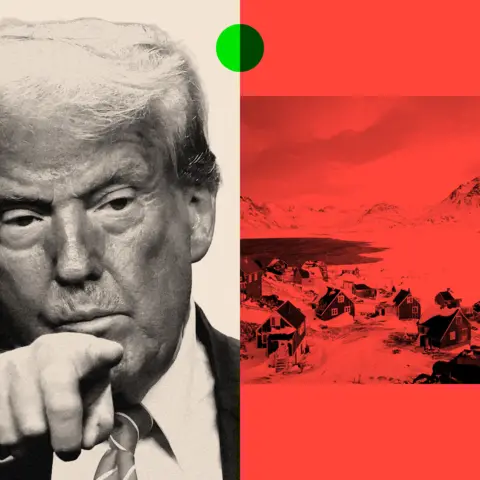
Earlier today, a informal Alliance of the Determined, predominantly composed of EU heads of state, met in the French capital with envoys of US President Donald Trump, attempting to make further progress on a lasting settlement for the embattled nation.
With Ukraine's President Volodymyr Zelensky insisting that a roadmap to conclude the conflict with Russia is "largely complete", no-one in that room desired to endanger keeping the US onboard.
Yet, there was an immense elephant in the room in that grand and glittering Paris meeting, and the underlying mood was profoundly tense.
Recall the events of the recent days: the Trump administration's divisive involvement in Venezuela and the US president's insistence following this, that "we need Greenland from the perspective of national security".
This massive island is the world's greatest island – it's sixfold the dimensions of Germany. It is located in the far north but is an self-governing possession of Copenhagen.
At the summit, Mette Frederiksen, Copenhagen's leader, was positioned opposite two influential individuals acting for Trump: emissary Steve Witkoff and Trump's son-in-law Jared Kushner.
She was subject to urging from her EU counterparts to refrain from alienating the US over the Arctic question, lest that affects US backing for the Ukrainian cause.
The continent's officials would have far preferred to compartmentalize Greenland and the debate on the war distinct. But with the political temperature mounting from Washington and Denmark, leaders of major European nations at the Paris meeting put out a communiqué stating: "The island is part of NATO. Defense in the Arctic must therefore be secured collectively, in conjunction with treaty partners like the America".
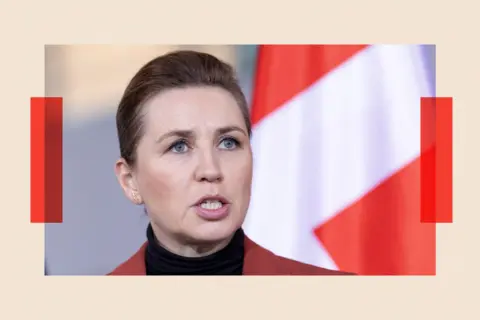
"It is for Denmark and Greenland, and no one else, to determine on affairs related to the kingdom and Greenland," the communiqué added.
The communique was greeted by the island's leader, Jens Frederik Nielsen, but critics argue it was slow to be put together and, because of the limited set of supporters to the declaration, it did not manage to show a European Union united in objective.
"If there had been a unified statement from all 27 member states, along with NATO ally the UK, in backing of Copenhagen's sovereignty, that would have sent a strong signal to Washington," stated a EU foreign policy specialist.
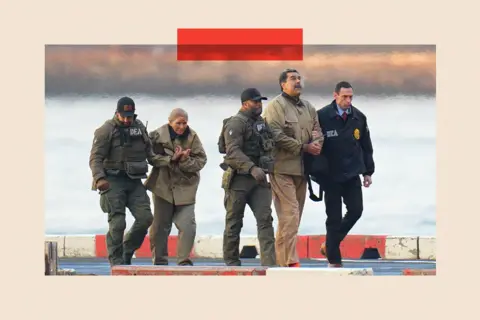
Consider the paradox at play at the Paris summit. Several European government and other officials, such as the alliance and the EU, are attempting to secure the cooperation of the US administration in safeguarding the future independence of a continental state (Ukraine) against the aggressive territorial ambitions of an foreign power (Moscow), just after the US has entered sovereign Venezuela by armed intervention, arresting its head of state, while also still publicly undermining the territorial integrity of another continental ally (the Kingdom of Denmark).
To add to the complexity – Denmark and the US are both participants of the defensive pact NATO. They are, according to Copenhagen, profoundly strong partners. Previously, they were considered so.
The issue is, should Trump fulfill his goal to assert control over the island, would it mark not just an severe risk to NATO but also a significant crisis for the EU?
Europe Faces the Danger of Being Overlooked
This is not the first time Trump has expressed his determination to acquire the Arctic island. He's floated the idea of buying it in the past. He's also not excluded a military seizure.
On Sunday that the territory is "vitally important right now, Greenland is covered with Russian and Chinese naval assets all over the place. Our security demands Greenland from the perspective of national security and Denmark is incapable to handle it".
Denmark contests that last statement. It has lately vowed to invest $4bn in Arctic security encompassing boats, drones and aircraft.
As per a treaty, the US has a strategic outpost already on Greenland – established at the start of the East-West standoff. It has scaled down the total of personnel there from approximately 10,000 during peak that era to around 200 and the US has frequently been criticized of neglecting the northern theater, recently.
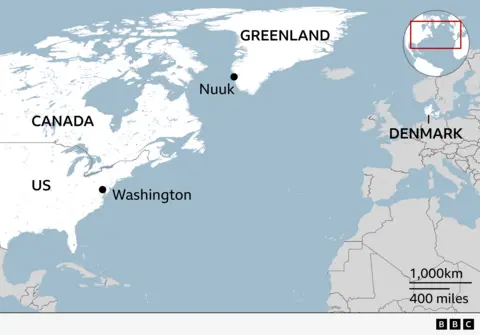
Copenhagen has signaled it is willing to talk about a larger US role on the island and more but confronted by the US President's warning of independent moves, Frederiksen said on Monday that Washington's desire to control Greenland should be taken seriously.
In the wake of the US administration's actions in Venezuela this weekend, her colleges across Europe are doing just that.
"These developments has just underlined – yet again – Europe's fundamental shortcoming {

